
Wisconsin Home Inspection Checklist: Basement, Radon, Roof, Furnace, and Sewer
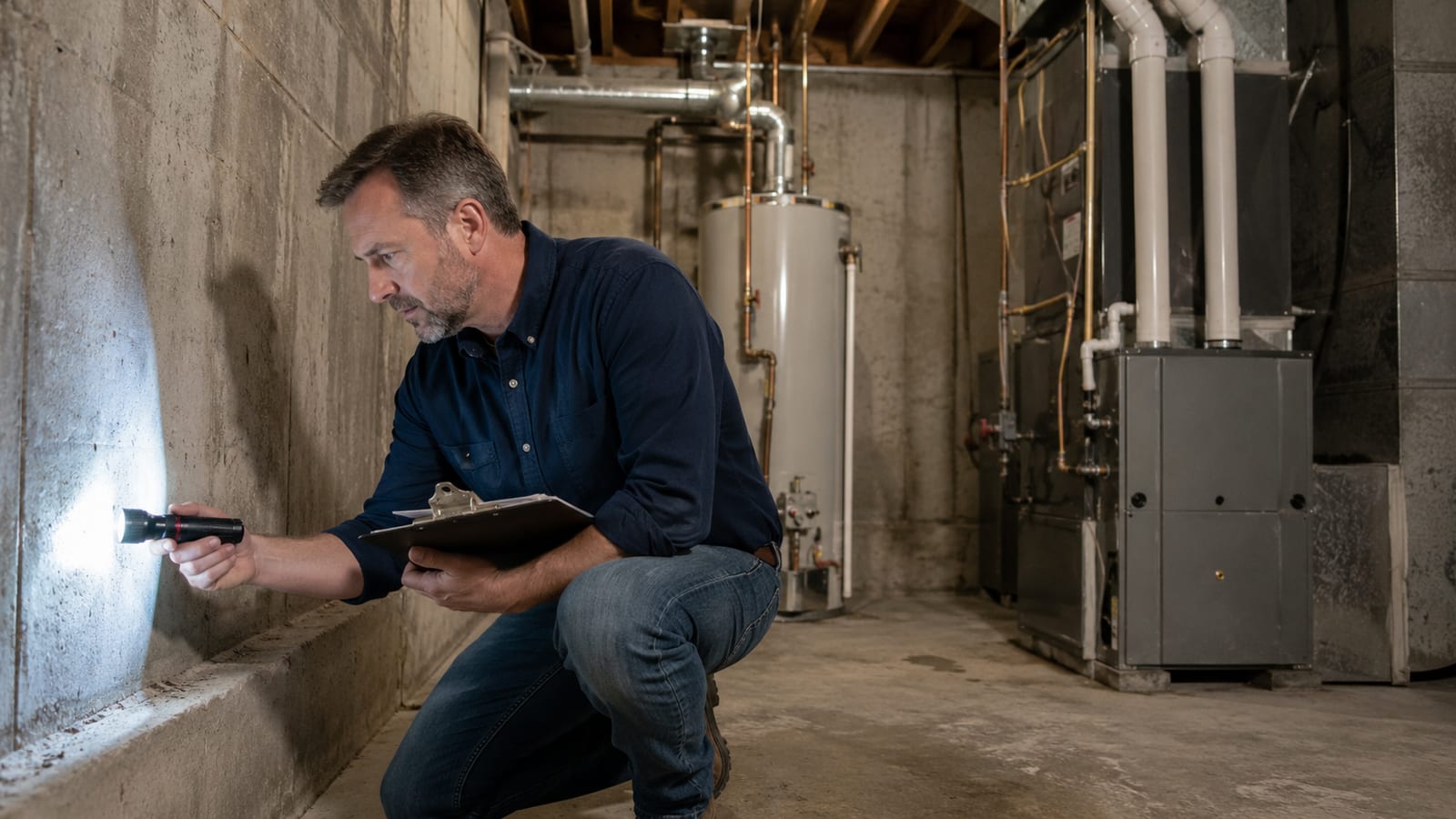
A home inspection is the single best protection a buyer has before committing to a purchase, and in Wisconsin the local conditions make a few items especially worth watching. A standard single-family inspection commonly runs about $300 to $500 (Angi 2026 data), and it is one of the smartest few hundred dollars you will spend. Here is what a thorough inspection covers, with the Wisconsin trouble spots called out.
A good inspector will walk you through everything below. Use this checklist to follow along and to know which findings deserve a second look.
The basement and foundation
Our freeze-thaw winters and wet springs put real stress on basements, so this is where Wisconsin inspections earn their keep.
- Signs of water intrusion: staining, efflorescence (white mineral deposits), or a musty smell.
- Foundation cracks, especially horizontal cracks or ones that have shifted.
- The grading around the house: soil should slope away from the foundation, and downspouts should carry water well clear of it.
- A working sump pump, and ideally a backup, in areas prone to a high water table.
Minor basement moisture is common and often fixable with grading and gutter work. Structural movement is a different conversation.
Radon
Radon is a naturally occurring radioactive gas, and it matters more in Wisconsin than many buyers realize. About 1 in 10 Wisconsin homes has radon above the EPA action level of 4 pCi/L, and in parts of Waukesha, Washington, and Dodge counties the share of homes above that level can be far higher (Wisconsin DHS). Radon is the kind of thing you cannot see or smell, so a test is the only way to know.
- Add a radon test to your inspection (it is usually a modest extra fee).
- If levels are high, a mitigation system can typically bring them down, and it is a reasonable item to negotiate.
The EPA’s Citizen’s Guide to Radon is a good plain-language primer.
The roof
- Age and remaining life of the shingles (asphalt roofs commonly last 15 to 25 years).
- Missing, curling, or damaged shingles, and the condition of flashing around chimneys and vents.
- Gutters and downspouts that are intact and draining away from the house.
- Ice-dam damage at the eaves, a common Wisconsin issue from snow melting and refreezing.
A roof near the end of its life is not a dealbreaker, but it is a real future cost to factor in.
The furnace and heating system
In our climate, heat is not optional, so furnace age and condition are near the top of the list.
- The age of the furnace (many last around 15 to 20 years) and whether it has been serviced.
- Signs of a cracked heat exchanger or carbon monoxide concerns, which an inspector will flag for further evaluation.
- The water heater’s age and condition.
- Adequate attic insulation and ventilation, which affect both comfort and ice dams.
Plumbing and the sewer line
- Water pressure, visible leaks, and the age and material of the pipes.
- The age and condition of the water heater.
- For older homes, consider a separate sewer scope: a camera run down the main sewer line to check for root intrusion, cracks, or bellies. Mature trees and older clay pipe make this worth it in many established Wisconsin neighborhoods, and a sewer repair is expensive enough that catching it early changes the deal.
Electrical
- The main panel’s capacity and condition, and any signs of amateur or unsafe wiring.
- Presence of outdated systems (older homes may have knob-and-tube or aluminum wiring worth evaluating).
- GFCI protection in kitchens, bathrooms, and near water.
Windows, doors, and the exterior
- Window age and seals (failed seals show as fogging between panes); energy efficiency matters through a Wisconsin winter.
- Siding, trim, and any signs of rot or pest damage.
- Decks, railings, and steps for safety and stability.
What to do with the report
An inspection almost always finds something. The point is not a perfect house, it is knowing what you are buying. Sort findings into three buckets: safety issues, expensive systems near the end of life, and minor maintenance. Your agent helps you decide what is worth renegotiating and what is just part of owning a home. Read it alongside your appraisal, which answers an entirely different question: here is what each one is for. For how that negotiation fits into a strong offer, see making a competitive offer without overpaying, and for the full buying path, our first-time buyer guide.
If you are buying anywhere in Southeast Wisconsin, a local agent who has seen these issues on homes like the one you are considering is worth a great deal. RRS can match you with a vetted local buyer agent for free, and you can browse market data for your city while you shop.
Sources
Buying a Home in Southeast Wisconsin?
Get matched with a local buyer agent who knows the inspection issues common in your area and can guide you through what the report really means. Free, no obligation.
Get matched with a buyer agent →Keep Reading
 Buying
 Appraisal vs Inspection: What Each One Is For When You Buy in Wisconsin
They happen around the same time and get confused constantly. One protects your lender, the other protects you. Here is what each covers and who pays.
 Selling
 The Best Time to Sell a House in Southeast Wisconsin, According to 10 Years of Local Data
Ten years of Southeast Wisconsin listing data show a clear seasonal pattern: winter inventory sits about twice as long as spring inventory, every year.
 Selling
 Buying and Selling at the Same Time in Southeast Wisconsin
Most movers have to do both, and the order you do them in decides how much risk you carry. Here are the options, the tradeoffs, and what to sort out first.